
Security is a major concern for businesses in Atlanta and beyond. Protecting employees, sensitive data, and valuable assets requires reliable access control systems. At The Atlanta Locksmith, we understand that choosing the right security solution is essential for safeguarding your business. Traditionally, mechanical locks and keys have been the backbone of commercial security. However, technological advancements have introduced keyless entry systems, which provide convenience, flexibility, and enhanced security features. This article explores the differences between keyless entry and traditional locks for business security, their advantages and disadvantages, and how business owners can make an informed choice.
Understanding Traditional Locks
Traditional locks, also known as mechanical locks, have been the cornerstone of business security for decades. They rely on a physical key to operate, with a variety of mechanisms including pin-tumbler, deadbolt, and lever locks.
How Traditional Locks Work?
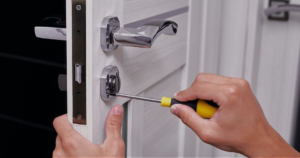
Traditional locks work on a simple mechanical principle. A key is inserted into the lock cylinder, aligning internal pins to allow the bolt to move. This action secures or opens the door. These locks vary in complexity, from basic locks used for storage rooms to high-security deadbolts for main entrances.
Advantages of Traditional Locks
Traditional locks offer several benefits for businesses, primarily due to their simplicity and reliability. They are relatively inexpensive to install, require minimal maintenance, and do not rely on electronic systems or power sources. Many businesses find mechanical locks easy to operate and understand, making them accessible to all employees without technical training.
Limitations of Traditional Locks
Despite their reliability, traditional locks come with limitations. Keys can be lost, duplicated, or stolen, creating security vulnerabilities. In larger businesses, managing multiple keys and distributing them to staff can become cumbersome. Additionally, mechanical locks provide no digital record of access, which limits accountability and oversight. Replacing locks after lost keys or staff turnover can also be costly and time-consuming.
Keyless Entry Systems Explained
Keyless entry systems use electronic or digital methods to control access without traditional keys. These systems can include PIN codes, access cards, biometrics, or smartphone-based controls.
Types of Keyless Entry Systems
Keyless entry solutions come in various forms, offering different levels of security and convenience. Common types include:
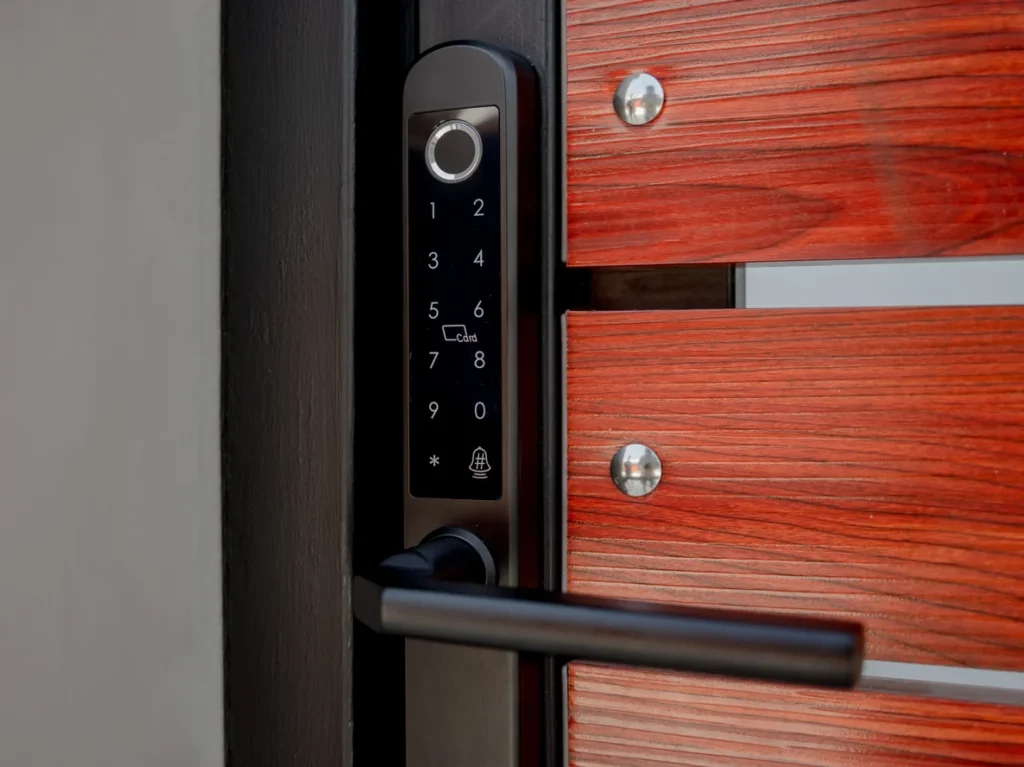
- PIN-Based Keypads – Users enter a code to unlock doors. Codes can be changed easily if compromised.
- Access Card Systems – Employees are issued cards or fobs that grant access when scanned.
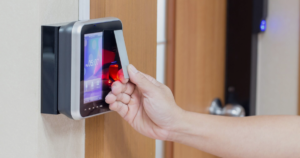
- Biometric Systems – Use fingerprints, facial recognition, or retina scans for access authentication.
- Smartphone Access – Mobile apps enable doors to be unlocked remotely or via Bluetooth/NFC technology.
These systems provide a higher degree of control and flexibility compared to traditional locks.
Benefits of Keyless Entry for Businesses
Keyless entry systems offer numerous advantages that make them ideal for modern business security needs.
- Enhanced Security: Digital authentication reduces the risk of unauthorized access. Biometric and card-based systems are harder to replicate than physical keys.
- Access Tracking: Many keyless systems record entry logs, providing an audit trail for monitoring who entered or exited the premises and when.
- Convenience: Employees no longer need to carry physical keys, reducing the risk of lost or duplicated keys. Access permissions can be updated instantly.
- Remote Control: Some systems allow managers to control doors remotely, granting or revoking access in real-time without visiting the site.
Also Read: Top Signs Your Home Lock Needs Replacement for Safety
Potential Drawbacks
While keyless systems are convenient, they are not without challenges. They can be more expensive to install and maintain compared to traditional locks. Electronic systems are also vulnerable to hacking, technical malfunctions, or power outages. Businesses must have backup plans, such as battery-operated locks or mechanical overrides, to ensure access continuity during system failures.
Comparing Security Features
When choosing between traditional locks and keyless entry systems, businesses should evaluate the security features of each option.
Physical Security
Traditional locks provide strong mechanical security. High-quality deadbolts or commercial-grade locks can resist forced entry and tampering. Keyless systems also offer robust physical security when integrated with reinforced doors and tamper-proof hardware. However, their main advantage lies in access management and monitoring rather than brute-force resistance.
Access Control
Traditional locks require distributing physical keys to employees, which can be risky if keys are lost or copied. Keyless entry allows precise control over who has access to specific areas and when. Permissions can be modified instantly, which is particularly beneficial for businesses with high staff turnover or multiple access levels.
Monitoring and Accountability
One of the major benefits of keyless systems is the ability to monitor access activity. Digital logs can help businesses identify security breaches, track employee attendance, and maintain accountability. Traditional locks provide no such data, making it difficult to determine who accessed a particular area or when.
Emergency Response
During emergencies, keyless systems can provide fast access for authorized personnel. Some systems integrate with fire alarms, emergency exits, or security systems to allow immediate egress. Traditional locks may require manual key access, which can slow response times in urgent situations.
Cost Considerations
Cost is an important factor when deciding between traditional locks and keyless entry systems.
Installation Costs
Traditional locks are typically inexpensive to install, requiring only a few hundred dollars for multiple doors. Keyless entry systems involve higher initial costs due to hardware, software, and potential integration with existing security systems.
Maintenance Costs
Mechanical locks require minimal maintenance but may need periodic key replacement or lock rekeying. Keyless systems may incur ongoing costs for software updates, battery replacement, and technical support.
Long-Term Value
While keyless entry has a higher upfront cost, it can save money in the long term by reducing the need to replace lost keys, rekey locks, or manage complex key distribution. Businesses also benefit from reduced security risks and enhanced operational efficiency.
Ease of Use and Employee Adaptation
Employee adoption is crucial for any security system to function effectively.
Traditional Locks
Most employees are familiar with mechanical locks, making them easy to use. However, managing multiple keys can be inconvenient, especially in large organizations with different access levels.
Keyless Entry Systems
Keyless systems require initial training and adaptation, especially for employees unfamiliar with digital devices. User-friendly interfaces and clear instructions can minimize confusion. Many systems now integrate mobile devices, which employees are already comfortable using, further simplifying adoption.
Integration with Modern Security Systems
Keyless entry systems can be seamlessly integrated with other security technologies.
Video Surveillance
Digital locks can synchronize with security cameras, allowing monitoring of who enters or exits the premises. This integration provides a comprehensive security solution.
Alarm Systems
Keyless entry systems can work in tandem with intrusion detection alarms, notifying security personnel of unauthorized access attempts. Traditional locks cannot communicate with digital systems, limiting overall responsiveness.
Remote Access Management
Businesses with multiple locations benefit from remote access control, which allows centralized management of all sites. Keyless systems offer real-time updates and instant revocation of access, which traditional locks cannot provide.
Security Risks and Mitigation
No security system is foolproof. Both traditional and keyless systems have vulnerabilities.
Traditional Lock Risks
Physical keys can be lost, stolen, or duplicated. Lock picking is another risk, particularly for lower-grade locks. To mitigate these risks, businesses may upgrade to high-security locks, use restricted key systems, or implement master key strategies.
Keyless Entry Risks
Keyless systems are vulnerable to technical failures, hacking, or malware attacks. Mitigation strategies include regular software updates, strong authentication methods, biometric verification, and physical backup options such as mechanical overrides.
Industry Applications
Different industries have varied security requirements, which influence the choice between keyless entry and traditional locks.
Corporate Offices
Large office buildings benefit from keyless entry due to multiple access levels and frequent staff changes. Real-time monitoring and access logs enhance accountability and security.
Retail Stores
Retail environments require secure access to storage rooms and cash handling areas. Keyless entry prevents unauthorized access while allowing easy tracking of employees entering restricted areas.
Healthcare Facilities
Hospitals and clinics must secure sensitive areas such as pharmacies, patient records rooms, and labs. Keyless entry ensures controlled access while maintaining emergency egress routes.
Industrial and Warehousing
Warehouses and industrial sites often require access control for multiple gates, loading docks, and storage areas. Keyless systems streamline operations and reduce the risk of lost keys or unauthorized access.
Making the Right Choice
Choosing between traditional locks and keyless entry depends on factors such as business size, security needs, budget, and technology readiness.
When Traditional Locks Are Ideal?
Small businesses with limited staff, low traffic, and a straightforward security requirement may find traditional locks sufficient. They offer simplicity, reliability, and minimal maintenance at an affordable cost.
When Keyless Entry Systems Are Ideal?
Medium to large businesses, multi-location enterprises, or businesses requiring precise access control benefit from keyless entry. The ability to monitor, manage, and customize access enhances overall security and operational efficiency.
Conclusion
Choosing the right access control system is crucial for business security. Traditional locks offer simplicity, reliability, and cost-effectiveness but have limitations in monitoring and access control. Keyless entry systems provide advanced features such as digital access, remote management, and accountability, although they require a higher investment and maintenance. By evaluating security needs, budget, and operational requirements, businesses can select the optimal solution.
The Atlanta Locksmith provides professional consultation and installation services for both traditional and keyless entry systems, ensuring your business remains secure, efficient, and compliant with modern security standards. Whether upgrading to a keyless system or maintaining mechanical locks, relying on expert locksmith services guarantees protection for your employees, assets, and sensitive information.